

Access to Interpretation and Translation in Immigration Detention
For many years the people GDWG supports have been raising their concerns about their difficulties accessing interpretation and translation in immigration detention. People held in immigration detention are foreign nationals and the vast majority do not have English as their first language. Despite this, people receive documents that are not translated and frequently tell us that they are told important information without an interpreter. We also hear many reports of poor quality interpretation. We have grown increasingly concerned about lack of adequate interpreter services in detention and the impact it has on the people we support.
Thanks to funding from Lloyds Bank Foundation we have carried out research into why interpreter services are not always considered to be effective by the people using them and the impact this has.
This collage was made by a person who was previously detained in an immigration detention centre. These collages depict what it is like to not be able to access an interpreter in detention.
Interpreting Best Practice Guide
Through our research we identified that a lack of training on how to work with interpreters was a key factor. Most organisations do not have a standard training for their staff on how to use interpreters and it is a resource not all organisations can afford. We therefore wrote an Interpreting Best Practice Guide. In this guide we outline basic information from our frontline experience of how to effectively use interpreters, what information should be provided to the interpreter and how conversations with interpreters should be approached.
Our thanks to Karris Hamilton and Dr Teresa Pilgrim for their work on the Guide. Our thanks to Tim Peters for his design work on the Guide.
Click here for the Best Practice Guide
How to Guide: Interpreter Access for Migrants
Our research has revealed that support staff and individuals alike are often not aware of their rights in regards to accessing interpreters. This is true not just in immigration detention settings, but across a wide range of public bodies and other organisations. We found that many public bodies and public facing organisations do not make their policies on access to interpreters easily accessible to people who need interpreter services.
Dr Teresa Pilgrim therefore worked with GDWG to create the 'How to Guide: Interpreter Access for Migrants: Legal Rights & Guidelines.' This Guide explains the policies that describe entitlement to an interpreter in the NHS, Home Office, Criminal Justice System, Department of Works & Pension, Local Authorities and Banking settings. The Guide is a tool for anyone supporting a person using one of these agencies and will be invaluable if a person is refused an interpreter on request. The Guide has been tested in the community and we have received reports of occasions when quoting policy from the Guide has resulted in interpreter provision being offered when it was initially refused.
Our thanks to Dr Teresa Pilgrim for work on the Guide. Our thanks to Tim Peters for his design work on the Guide.
An easy read version of the Guide is available here.
Versions of the guide in other languages will soon be available.
Silenced by the System: Access to Interpreters in Immigration Detention
Karris Hamilton has produced a research report based on casework records, on hundreds of conversations with detained people and through focus groups with people in detention all informing us about the issues people experience and what change is required to improve communication for detained people. Thanks to all the GDWG team who have worked with Karris sharing case studies and their experience to make the research possible. Thanks to everyone in detention who has trusted GDWG to represent their experiences and shared the detail of their communication struggles before, during and after detention.
Our thanks to Karris Hamilton for the Report. Our thanks to Tim Peters for his Report design.
Our Commitment
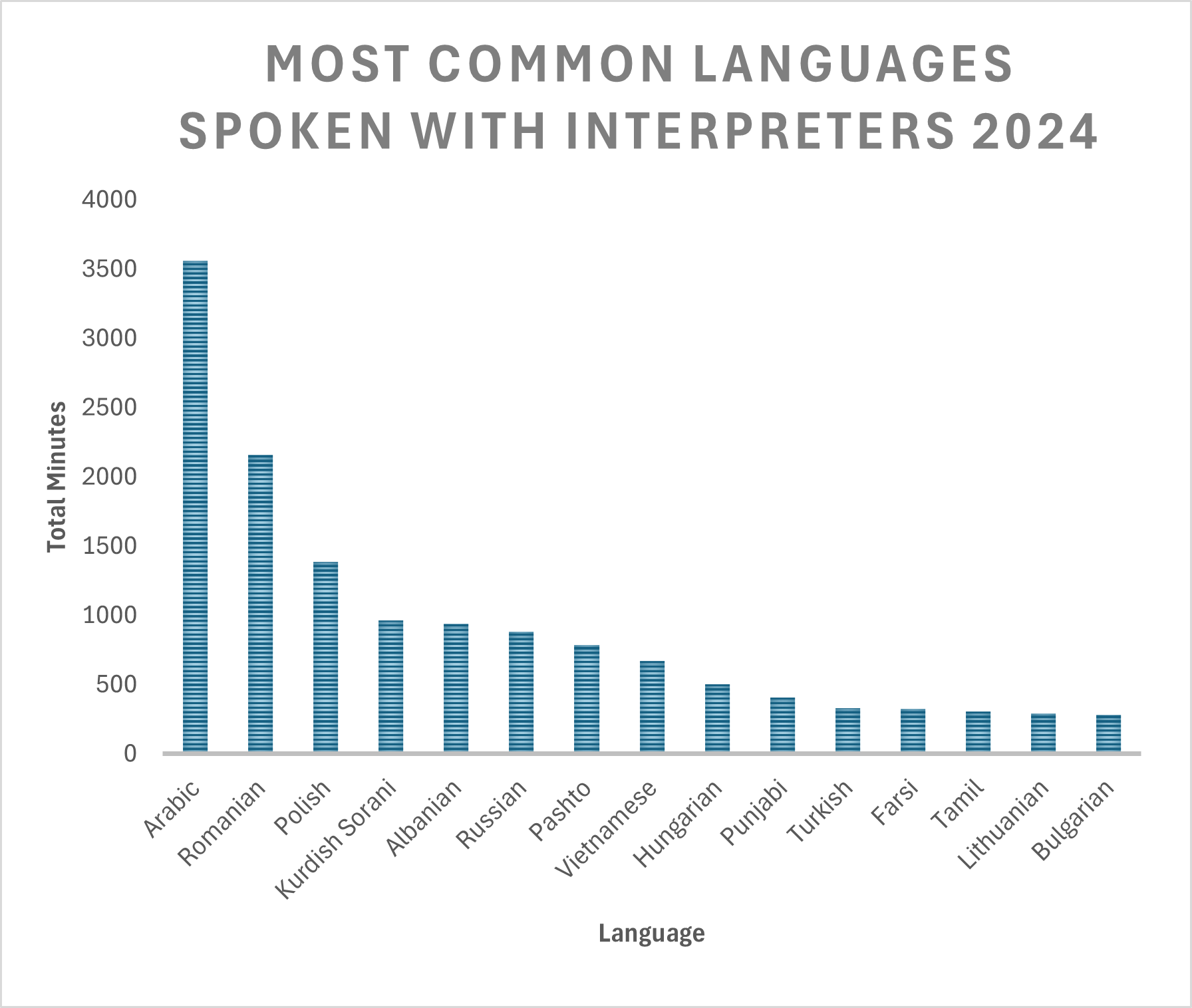
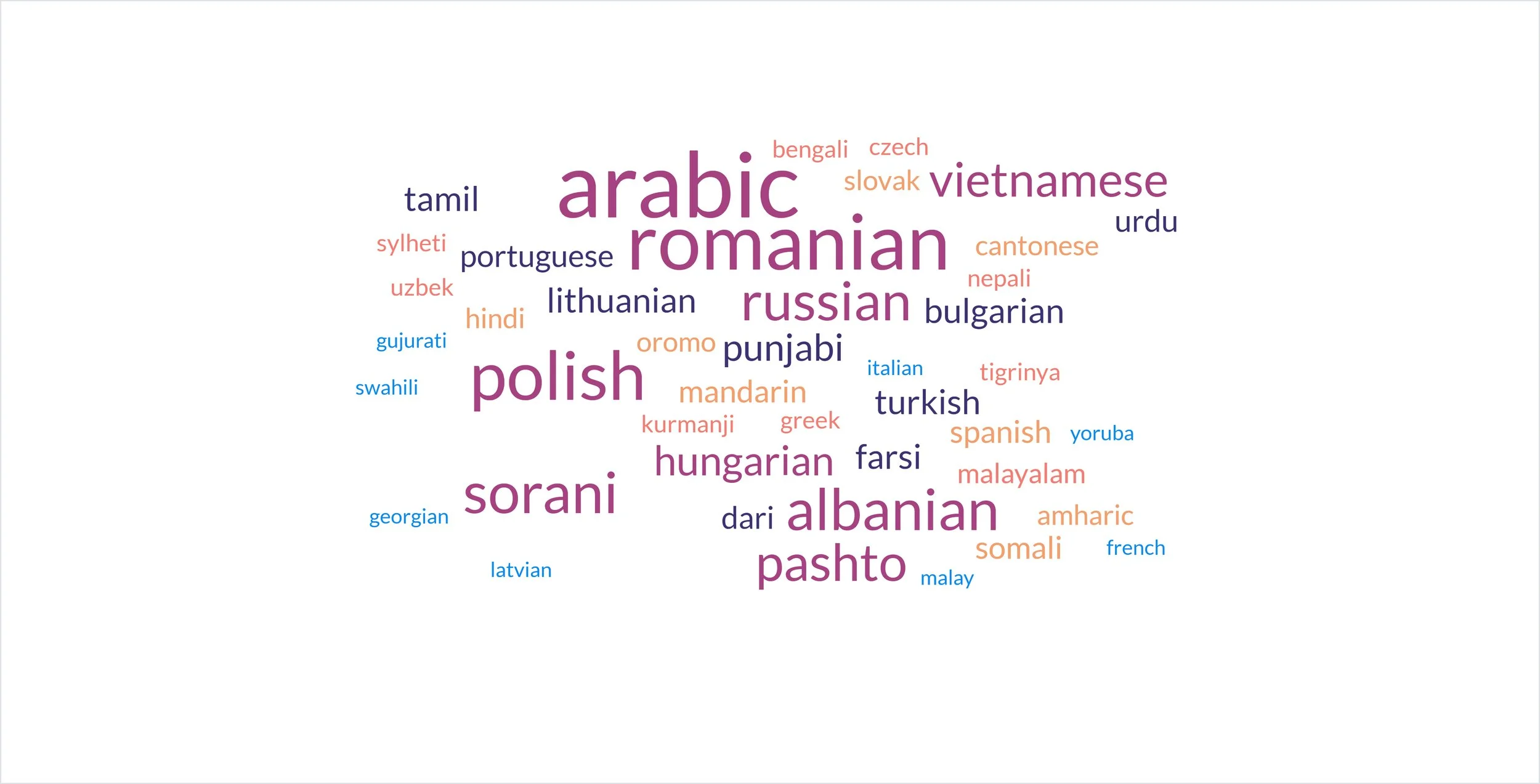
GDWG is committed to using interpreters to assist with communication and building trust with the people we support. We believe it is discriminatory not to use interpreters for effective communication. In 2024, 27% of calls to people in detention made by GDWG caseworkers were made using an interpreter.


2026 Forum
Dipti Nagpaul is organising a Forum on the issues of interpreter provision in 2026. To register your interest to deliver a paper or to attend, please email Dipti@gdwg.org.uk for more information.
-
“I don’t feel confident speaking in English... I try to use sign language with the security guards or I use my friends to help me if I need to talk to the Home Office. If I need a new pillowcase I have to ask my friend to help me. If I need help, I realise I am asking someone to give up an hour of their time to interpret for me. If I want to take part in activities I can’t because I don’t understand.”
Quote from participant at November 2024 Focus Group in Brook House
-
“I am anxious and wondering if I got everything right, if there was something I could have done better. If we had the basic paperwork in our language at least we can refer to it. But here we have to rely on what we hear in a language we don’t understand. Of course we end up seeking mental health support eventually.”
Quote from participant at May 2025 Focus Group in Brook House